Qvents

Qvents

Discussion forum for Pharma Quality events, Regulatory Actions

Warning letters, 483s, Recalls, Import Alerts, Audit observations

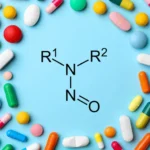
The EMA has published an updated version of its Questions and Answers for Marketing Authorisation Holders on Nitrosamine Impurities in Human Medicinal Products (November 2026). The revision introduces new risk factors, expands guidance on establishing acceptable intake limits, clarifies the approach for other N-nitroso compounds, and extends timelines for implementation of corrective and preventive actions (CAPAs) for control of Nitrosamine exceeding the AI limits

Key Changes in the Updated Q&A

  • New Risk Factor Added
    Parenteral products packaged in polymer bags
  • Revised AI Approach for Nitrosamines Originating from Excipients
    Consideration of maximum daily excipient consumption
  • CAPA Implementation Timeline Extended
    Extended from 3 years to 7 years from publication of the initial AI
  • New Guidance for Other N-Nitroso Compounds
    Use of compound-specific data or negative Ames test outcomes
  • Application of Less-Than-Lifetime (LTL) Adjustment Factors
    Now clarified for nitrosamines with established AIs
New Risk Factors (Updated Q&A 4):
  • Nitrosamines may originate from amines and nitrosating agents present in packaging components, including monomers, polymer additives, and printing inks. These substances can form during manufacture of bags, leach into the medicinal product during storage. EMA recommends that this risk be evaluated during extractables and leachables (E&L) assessments.
Establishing Acceptable Intake (AI limits) for Nitrosamines originating from excipients (Updated Q&A 10)
  • For establishing limits for nitrosamines originating from excipients maximum daily amount of excipient consumed when consuming the maximum daily dose of the medicinal product should be considered. The limit should ensure that patient exposure does not exceed the acceptable intake (AI) in ng/day.
CAPA Implementation Timeline Extended (Updated Q&A 22)

For medicinal products containing nitrosamines above the established AI, EMA has extended the CAPA implementation timeline from 3 years to 7 years from the date of publication of the initial AI. A correction factor of 6.7xAI may be applied for products with duration of administration from > 10 years to lifetime during CAPA implementation.

However, total intake should not exceed 1.5 µg/day, unless:

  • The established AI exceeds 1.5 µg/day
  • The nitrosamine is classified as Category 5 under the CPCA approach
  • A negative Enhanced Ames Test (EAT) supports a higher limit
New Q&A 23 – Other N-Nitroso Compounds

EMA recognises that N-nitroso compounds other than nitrosamines may also present significant carcinogenic risk. For deriving acceptable limits use same principles as recommended for N-Nitrosamines in Q&A 10 for other N-nitroso structures:

  • Use compound-specific carcinogenicity data  or read-across to a scientifically justified surrogate to derive substance specific limit in accordance with ICH M7(R2).
  • Compounds with a negative Ames test may be controlled to a limit of 1500 ng/day (1.5 µg/day).
  • Where no compound-specific AI can be established, a TTC of 18 ng/day should be applied.
  • The CPCA approach should not be used for establishing limits for other N-nitroso structures.
  • Less-Than-Lifetime (LTL) adjustment factors are not applicable to other N-nitroso compounds
New Q&A 24 – Less-Than-Lifetime (LTL) Adjustment Factors for N-Nitrosamines

LTL adjustments factors as per ICH M7 guideline can be applied to established AIs for nitrosamines for products intended for less-than-lifetime administration.

Duration of administration Adjustment factor Adjustment factor
≤ 1 Month 80 x AI
> 1 Month – 12 Months 13.2 x AI
> 1 Year – 10 Years 6.7 x AI
> 10 Years to Lifetime Lifetime AI (No adjustment)

The latest revision provides additional flexibility for managing nitrosamine risks while simultaneously expanding the scope of risk assessments expected from MA holders. Particular attention should be paid to packaging-related nitrosamine formation, excipient-derived nitrosamines, and the new framework for other N-nitroso compounds.

Leave a Comment